[an error occurred while processing this directive]
Antique Beer Photos:
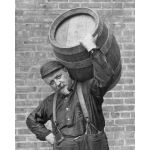
Dozens of prints available in a variety of sizes up to 40x50. |  |
|
|
THE DUTCH ACT.
By Donald Roussin & Kevin Kious (618-346-2634)
Suicides by prominent St. Louis German-Americans, which included a number of brewers, became so notorious that their affliction became known as the "Dutch Act." The phrase was coined by the St. Louis Police Department who had to investigate all the untimely deaths. Four members of the Lemp family took their own lives. William Lemp Sr. was the first. Following the deaths of his favorite son Fred in 1901 and his close friend brewer Frederick Pabst in 1904 (Lemp's daughter Hilda had married Pabst's eldest son Gustav in 1877), associates described Lemp as a nervous, changed man, who while still showing up for work at the brewery had become indifferent to its operations. On February 13, 1904, he shot himself in the head with a .38 calibre revolver in an upstairs bedroom of the Lemp mansion. He was 67 years old.
Lemp's daughter Elsa was the family's second suicide, taking her own life in 1920 at her home in New York City. She was only 36.
William Lemp Jr. was soon to follow. Doubting that Prohibition would ever end, he had sold his company's famous Falstaff trademark to aspiring beverage producer "Papa" Joe Griesedieck. Then, after receiving only eight cents on the dollar for his auctioned brewery, Lemp became increasingly morose and depressed. Months later, on December 29, 1922, the 55 year old Lemp shot himself in the heart in his mansion office.
Charles Lemp was the family's final suicide. William Jr.'s brother had worked at the brewery in his younger days before going on to a successful career in banking and politics. But the old bachelor grew ever more reclusive with age, and in 1949, aged 77, and bothered by arthritis, shot himself in his bed at the Lemp mansion.
Other suicides notable in St. Louis brewing history include P. H. Nolan, Otto Stifel, and August Busch.
Patrick Henry Nolan was vice-president and general manager of the Mutual Brewing Company of St. Louis, which erected a brewery at 236 S. Boyle in 1912. Largely owned by area saloon operators, the brewery was hit by financial problems late in 1914, and Nolan committed suicide at the brewery office the night before a scheduled appearance in bankruptcy court.
Otto Stifel of the Union Brewery was the next brewer to take his own life. Angry over the passage of Prohibition, saddled with large gambling and other debts, and facing a loss of his lifestyle after losing much of his inheritance, Stifel shot himself in the mouth at his beloved Valley Park farm in August, 1920. He left several rambling suicide notes, blaming Prohibition and money problems caused by allegedly unscrupulous family and business associates for his mental state.
Anheuser-Busch patriarch August A. Busch was yet another suicide victim. The son of Adolphus Busch, August A. had scrambled during the years of Prohibition to keep the family business going. With repeal in 1933 the future seemed promising for the company. But ill health began to overtake Busch, and after complaining of recurring chest pains the morning of February 13, 1934, he decided to end it all, using a revolver kept in the nightstand at his Grant's Farm bedroom. The 68-year old brewer left an unsigned note reading "Goodbye precious mama and adorable children."
... Back to Lemp Article
|
