[an error occurred while processing this directive]
Antique Beer Photos:
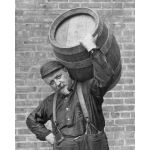
Dozens of prints available in a variety of sizes up to 40x50. |  |
|
|
THE TASTE OF FALSTAFF.
By Donald Roussin & Kevin Kious (618-346-2634)
Many have commented while viewing turn of the century brewery worker photos, that the beer in the glasses or mugs in the workers' hands invariably resembles murky mud. The question that then comes into mind of many beer lovers is, what did the old brews really taste like? Beer does not improve with age like many wines, so one can't just uncork a bottle of Lemp Extra Pale, '01, and find the answer by taste.
Fortunately, at least in the case of Lemp's Falstaff we do have a good idea of what it tasted like. A number of "old timers" that drank Lemp's Falstaff have been interviewed in the years since Repeal. Most described it in the same general way: medium gold in color, dry, effervescent, with a pronounced hopped tang, and a long, slightly salty finish. Further, all these same men compared the original Falstaff taste to one brand that is still on the market: Heinekens, imported from the Netherlands. So, the next time you drink a bottle of Heinekens, close your eyes, think of Lemp's Falstaff beer, and make a toast to the glory years of the William J. Lemp Brewing Company.
Kevin Kious and Donald Roussin are both staff writers of the ABA Journal. A number of items from both authors' collections were utilized in this article. Among the sources used in researching this article were: One Hundred years of Brewing, by H. S. Rich and Company; History of the Brewing Industry in St. Louis, 1804-1860, by James Lindhurst; Lion of the Valley, St. Louis, by James Neal Primm; Beer: A history of Suds and Civilization, by Gregg Smith; Gate Family History, by Christine Hawes-Bond; The Lemps, Kirkwood Historical Review, March 1975.; Encyclopedia of the History of St. Louis, by Southern History Co., 1899; Letter to Falstaff, 1967, by John G. Shea; and Lemp: The Haunting History, by Stephen Walker
Darryl Bein, Curt Falkenbury, Sam Marcum, Steve Debellis and his St. Louis Inquirer, and St. Louis Globe-Democrat; all provided assistance in the preparation of this article. Steve DeBellis now owns the rights to the Lemp Beer trademark, and distributes a canned version of Lemp Beer through the Schuncks Supermarkets chain.
... Back to Lemp Article
|
